When healthcare professionals don’t have answers, you don’t have to settle for just living with physical symptoms— a specialist psychotherapy called ISTDP can help you move beyond them.
Functional Neurological Disorder (FND) and Functional Physical Symptoms
-
What Are Functional Symptoms?
Functional symptoms are physical problems that arise from the way the nervous system is functioning, rather than from disease or structural damage. These are common, often misunderstood, and can be as disabling and painful as illnesses with a clear physical cause.
-
Examples of functional symptoms
Neurological: Non-epileptic seizures, functional weakness or paralysis, sensory disturbances (numbness, tingling), tremors, dizziness, visual changes.
Gastroenterological: Irritable bowel-type symptoms (bloating, pain, diarrhoea or constipation), nausea, indigestion.
Respiratory: Shortness of breath, tight chest, hyperventilation, chronic cough or throat tightness (often called Inducible Laryngeal Obstruction or functional breathing pattern disorders).
Urological: Urinary urgency, frequency, pain without infection, retention.
-
How Do Functional Symptoms Develop?
Functional symptoms are real physical symptoms. They are not imagined, and they are not simply a matter of consciously thinking yourself into feeling unwell.
The word functional refers to a problem with the way the nervous system is operating rather than damage to the body's tissues or organs. Modern research suggests that functional neurological symptoms can involve changes in the way the brain processes threat, attention, bodily sensations, prediction and the sense of control over the body.
But what causes these changes?
There is no single cause of functional symptoms. They can develop in different ways and for different reasons. For some people, symptoms begin following an injury, illness, operation or other physical event. For others, they emerge during periods of significant stress or emotional strain. Sometimes there is no obvious trigger at all.
One important pathway involves the way the nervous system responds to emotions and stress.
-
When Emotions Become Physical
Our emotional experiences are not purely psychological. Emotions are accompanied by changes throughout the body: heart rate changes, muscles tense, breathing changes, the digestive system is altered and attention becomes focused on things that feel important or threatening.
Normally, these changes are temporary. We experience the emotion, the situation passes, and the nervous system settles again.
However, when emotions are repeatedly avoided, suppressed or experienced as overwhelming, the body's response to emotional activation can become more persistent or maladaptive.
This can happen particularly when a person has learned, often very early in life, that certain feelings are difficult, dangerous or unacceptable. For example, anger, grief, fear, guilt or longing may be experienced without the person consciously recognising what they are feeling. Instead, emotional activation may be experienced primarily through the body.
Over time, the nervous system can develop highly practised ways of responding to emotional stress. In some people this can contribute to symptoms such as pain, gastrointestinal disturbance, breathing difficulties, dizziness, weakness, altered sensation, tremor or dissociative episodes.
This does not mean that the symptoms are voluntary or that someone is consciously producing them. The processes involved can operate outside conscious awareness.
-
First, Medical Investigation Matters
Before considering psychological treatment, it is essential that any physical symptoms are fully investigated by medical professionals. This ensures that any underlying medical conditions are identified and treated appropriately. Only when these have been ruled out or clarified is it appropriate to explore psychological assessment and potential treatment.
-
How I can help
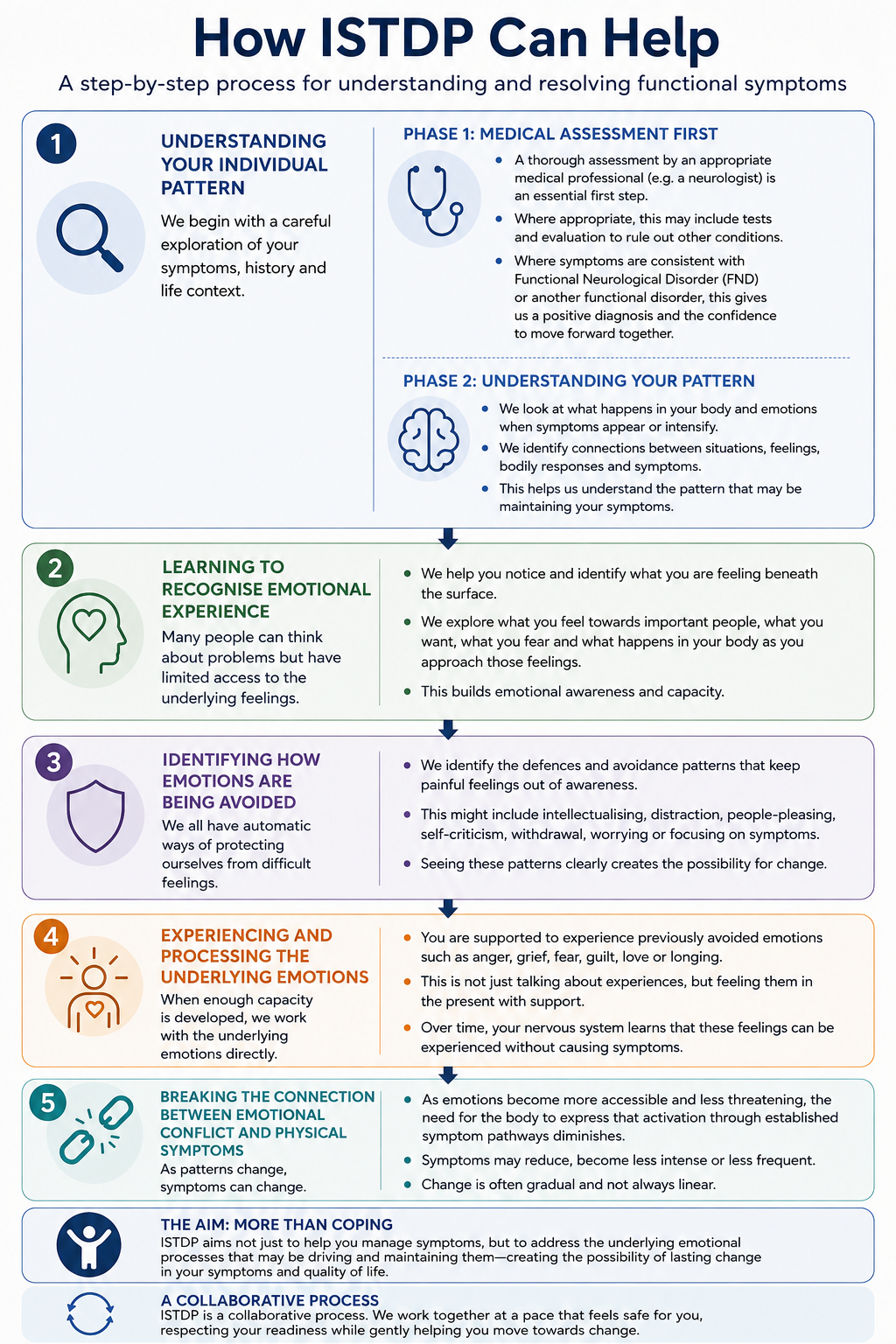
Research has shown that while many psychological treatments focus on managing symptoms of functional disorders, Intensive Short-Term Dynamic Psychotherapy (ISTDP) is the only psychological approach with an evidence base for actually reducing symptoms, not just helping people cope with them.
ISTDP is a psychodynamic therapy that focuses on identifying and processing unconscious emotional processes that can drive physical symptoms. Many functional symptoms arise when the nervous system becomes overwhelmed by stress, emotion, or unresolved trauma. In some cases, this distress is outside of conscious awareness. ISTDP helps bring these emotional patterns into focus and resolve them, offering the possibility of real change—not just management.